A harvest forecast that gets more accurate every cycle you finish.
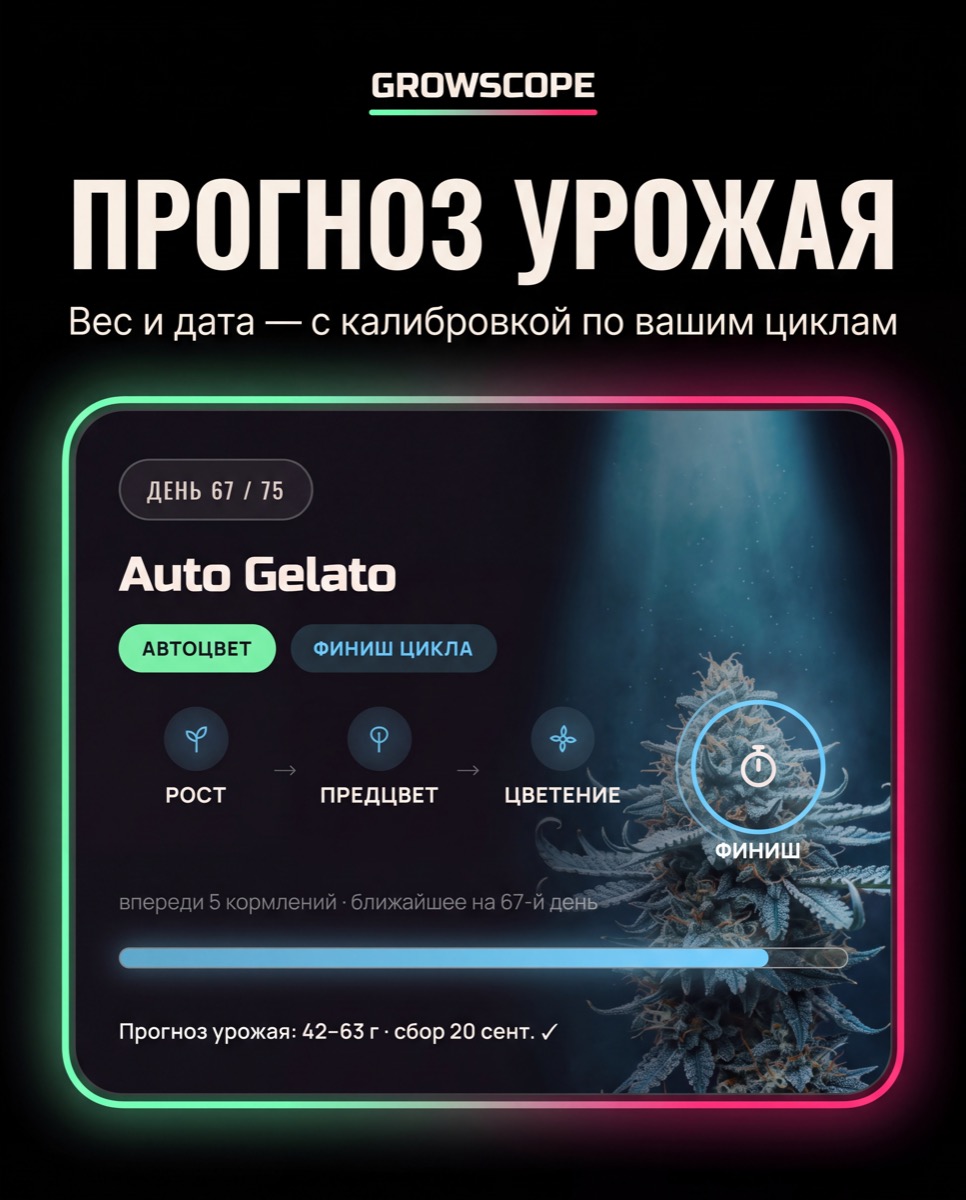
GrowScope estimates a weight range and harvest date from your plant's canopy width and light readings. Once you have completed cycles of your own — ideally the same strain — that estimate blends in your own historical yield and duration, instead of relying on the base formula alone.
The problem
A generic yield formula based on canopy size and light intensity ignores the one thing that actually predicts your results best: what your own setup, in your own space, with your own habits, has actually produced before. Two growers with identical canopy and light numbers can get very different real yields.
Why it's hard to solve alone
A forecast that never learns from your actual results is only ever as good as its starting assumptions. One that calibrates against your own completed cycles gets closer to reality precisely because it's learning from your reality, not a generic average.
How GrowScope helps
The base forecast comes from canopy width and your latest light reading. Once you have completed cycles, GrowScope matches against them — preferring the same strain if you've grown it before, falling back to the same plant type (autoflower or photoperiod) otherwise — and blends their actual yield-per-area and cycle duration into the forecast. The more matching history you have, the more that history shapes the number, up to a capped blend so a single unusual cycle can't swing the forecast too far.
How it works
- The base weight-range and harvest-date forecast is computed from the plant's canopy width and its latest light (DLI) reading.
- Once completed cycles exist in your archive, GrowScope looks for matches — the same strain first, then the same plant type as a fallback.
- Matching cycles' actual grams-per-square-meter and cycle duration are blended into the forecast, with more history weighted more heavily, up to a cap.
- A checkmark on the forecast shows when it's been calibrated against your own history versus using the base formula alone.
In the app
What you get
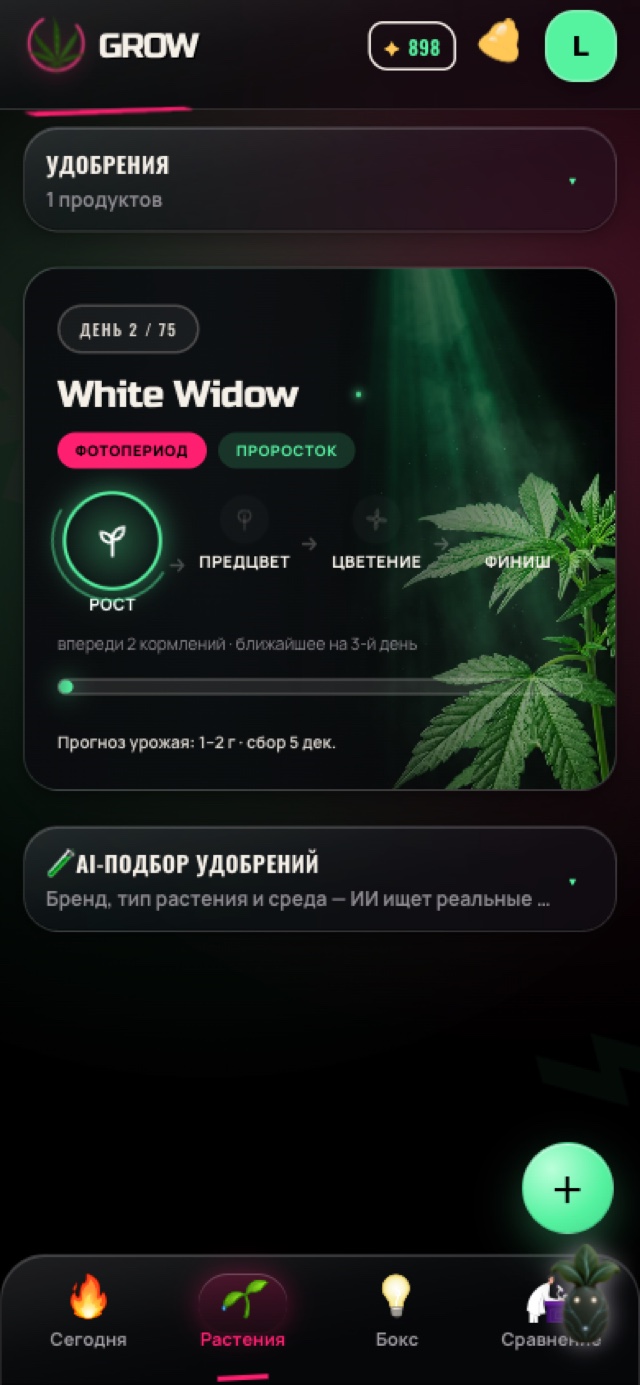
Your first cycle gets an honest formula-based estimate. Every cycle after that, the forecast gets a little closer to what your own setup actually tends to produce.
Frequently asked questions
Do I need a minimum number of completed cycles for calibration to work?
No — even a single matching completed cycle is used, though its influence on the forecast is capped so one unusual result can't dominate. The more matching cycles you have, up to that cap, the more the forecast leans on your own history.
What happens on my very first grow, with no history at all?
You get the base forecast — computed from canopy width and light readings alone, clearly shown as uncalibrated rather than presented as more certain than it is.
Does it match against other growers' cycles, or only my own?
Only your own completed cycles. Comparison against other growers' data is a separate feature (Grower Benchmarks) — the forecast calibration never uses anyone else's history.
Is the forecast guaranteed to be accurate?
No — it's explicitly labeled as an estimate, not a guarantee, both before and after calibration. It gets more grounded in your own results over time, but it can't account for anything that hasn't happened yet in the current cycle.